



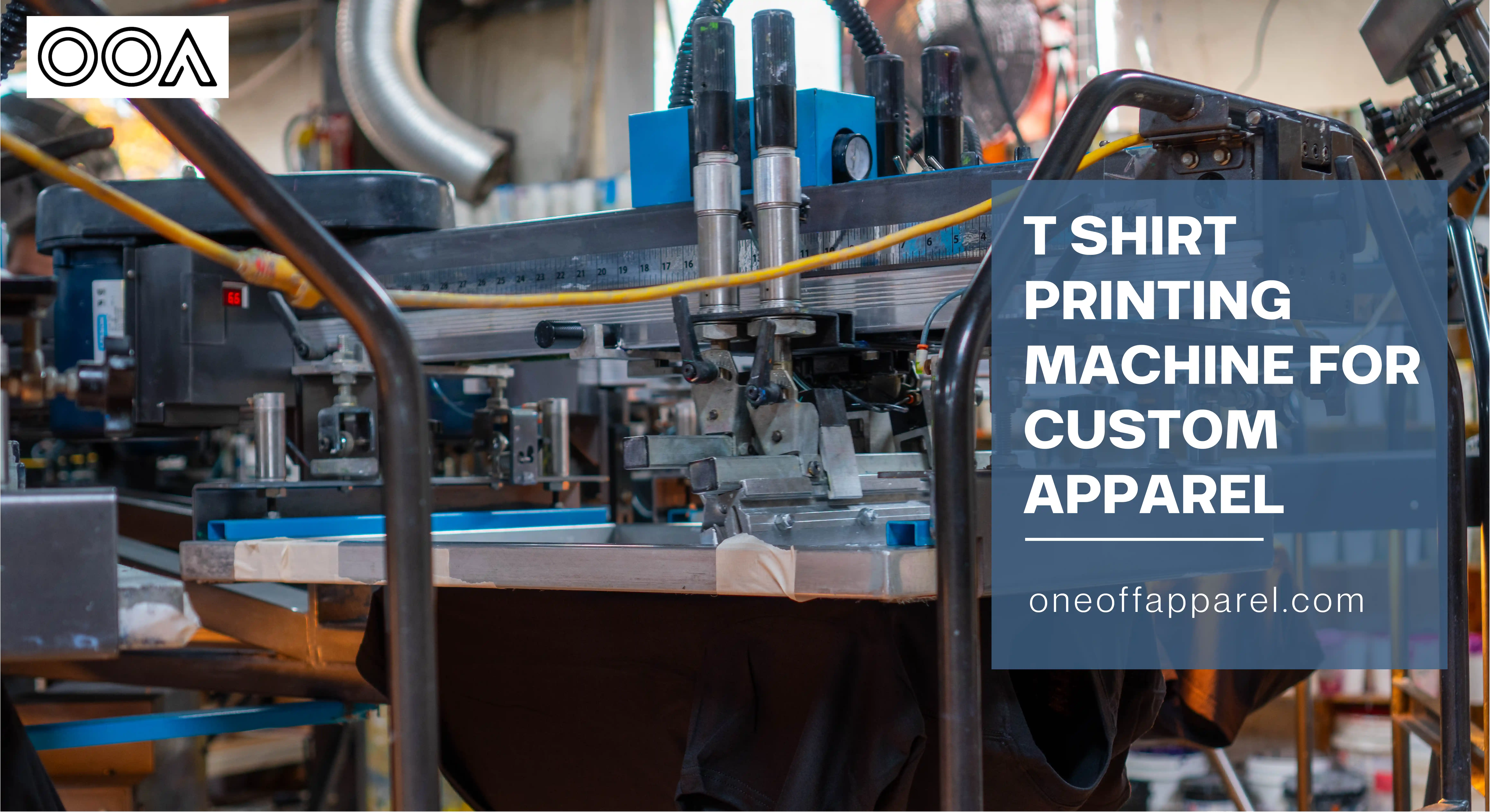

The most critical mistake in ordering custom t-shirt printing happens before a single drop of ink touches fabric. It’s the choice of the printing method itself—a decision that dictates your project's cost, timeline, and final quality. Making the wrong call leads to budget overruns and a product that doesn't match your vision. The two primary professional methods, screen printing and Direct-to-Garment (DTG), are specialized tools for different jobs.
The decision hinges on logistics and budget. Understanding how to choose correctly is what separates a smooth, professional outcome from a costly headache. It’s a fundamental calculation that any serious print shop, including the experts at One Off Apparel in West Boylston, makes to ensure a project succeeds.
Section 1: When to Use a T Shirt Printing Machine for Screen Printing
Choose screen printing when your project is about volume. This is the most important variable. Screen printing is a mass-production method using physical stencils (screens) and thick inks. The setup, which involves creating a screen for each color in your design, requires significant time and materials. That setup cost must be distributed across a large number of shirts to be financially viable.
Screen printing is the correct choice if your project aligns with these points:
- You have a large order of custom ink shirts. The industry benchmark for screen printings to become cost-effective starts at around 50 identical pieces. Our expert team can help maximize your order’s potential. The higher the volume, the lower your per-shirt cost, especially considering shipping costs. This is the proper route for achieving cheap T shirt printing at a professional quality standard.
- Your design uses solid colors. It is built for solid graphics, logos, and text. While it can handle some complexity, it excels with designs that have a limited color palette (1-4 colors is a common sweet spot).
- Durability is a top priority. The standard plastisol ink creates a thick, flexible layer of color that sits on top of the fabric. Once cured, this print is incredibly resilient and will often outlast the shirt itself, making it ideal for workwear, retail merchandise, and uniforms.
- Precise color matching is required. If your brand uses a specific Pantone (PMS) color, screen printing is the superior method. Inks can be manually mixed to match the code exactly.
- You're printing on various fabrics. Screen printings is highly versatile and adheres well to cotton, polyester, and blends, offering consistent results across different materials.
Avoid screen printing for small jobs. It is the wrong tool for an order of 15 shirts with a multi-color design. The setup costs would make the price per item far too high.
Section 2: When to Use a T Shirt Printing Machine for Direct-to-Garment (DTG)
Choose Direct-to-Garment when your project is about detail and flexibility. DTG is a digital printings process that is distinct from DTF. A highly advanced T shirt printing machine uses inkjet technology to apply fine droplets of water-based ink directly to the fabric, including sweatshirts.
There are no screens and therefore no manual setup costs per color, making it perfect for creating custom apparel and accessories. This is the foundation of modern custom T shirt printing.
DTG is the correct choice if your project aligns with these points:
- You have a small order. DTG is the most economical option for any quantity from a single shirt up to around 50 pieces. It is the technology that makes Personalised T Shirt Printing possible.
- Your design is highly detailed or photographic. Because it functions like a high-end printer, DTG can reproduce millions of colors, smooth gradients, and the intricate details of a photograph with exceptional clarity.
- A soft, breathable print is important. The water-based inks soak into the fabric fibers instead of sitting on top. The result is a print you can barely feel, which is often preferred for fashion or retail apparel.
- You are printing on 100% cotton. This is a key technical requirement. DTG ink chemistry is optimized for natural fibers and delivers its most vibrant and lasting results on 100% cotton. While some high-cotton blends can work, performance decreases as the synthetic content increases.
Avoid DTG for large volume orders. The per-shirt print time makes it inefficient for several hundred pieces, resulting in a higher total cost than screen printing. It is also not the ideal tool for 100% polyester apparel; that specific job requires a different technology, such as a Dye Sub Printer For T Shirts.
Section 3: The Bottom Line – A Direct Comparison
| Art Type Jersey | Screen Printing | Direct-to-Garment (DTG) |
|---|---|---|
| The Job | High-volume production runs. | Low-volume, high-detail projects. |
| Quantity | 50+ units. Necessary for a good price. | 1 to 50 units. Ideal for small batches. |
| Art Type | Logos, text, bold graphics. | Photographs, illustrations, complex colors. |
| Durability | Highest possible. Built for long-term wear. | Good. Will hold up to regular home washing. |
| Fabric | Highly versatile (cotton, poly, blends). | Specific (best on 100% cotton). |
| The Cost | High setup fee, low unit cost. | No setup fee, higher unit cost. |
Which Print Method Is Best For Custom T-shirts With No Minimum?
For custom t-shirts with no minimum order, direct-to-garment (DTG) printing, along with embroidery, is the best method. DTG allows for high-quality, full-color designs and is ideal for small batches or single items. This approach offers flexibility and creativity without the need for large inventory commitments, making it perfect for beginners.
Conclusion
In the end, a The question isn't 'which method is better?' The right question is 'which method is correct for this specific job of custom shirts?' Your decision should be a calculated one based on three variables: order quantity, design complexity, and fabric type, such as Gildan or Bella fabrics. Analyze those three factors, and the right choice becomes clear. Getting them right is how successful custom tee T Shirt Printing Machine projects are executed.
If you find your project has factors that push it into a grey area, consult an expert. A conversation with a professional shop—the kind of place with the hands-on experience of One Off Apparel—will provide clarity and prevent a costly error. Base your choice on the facts of your project, and you will get the product you expect.
© Copyright All Rights Reserved