



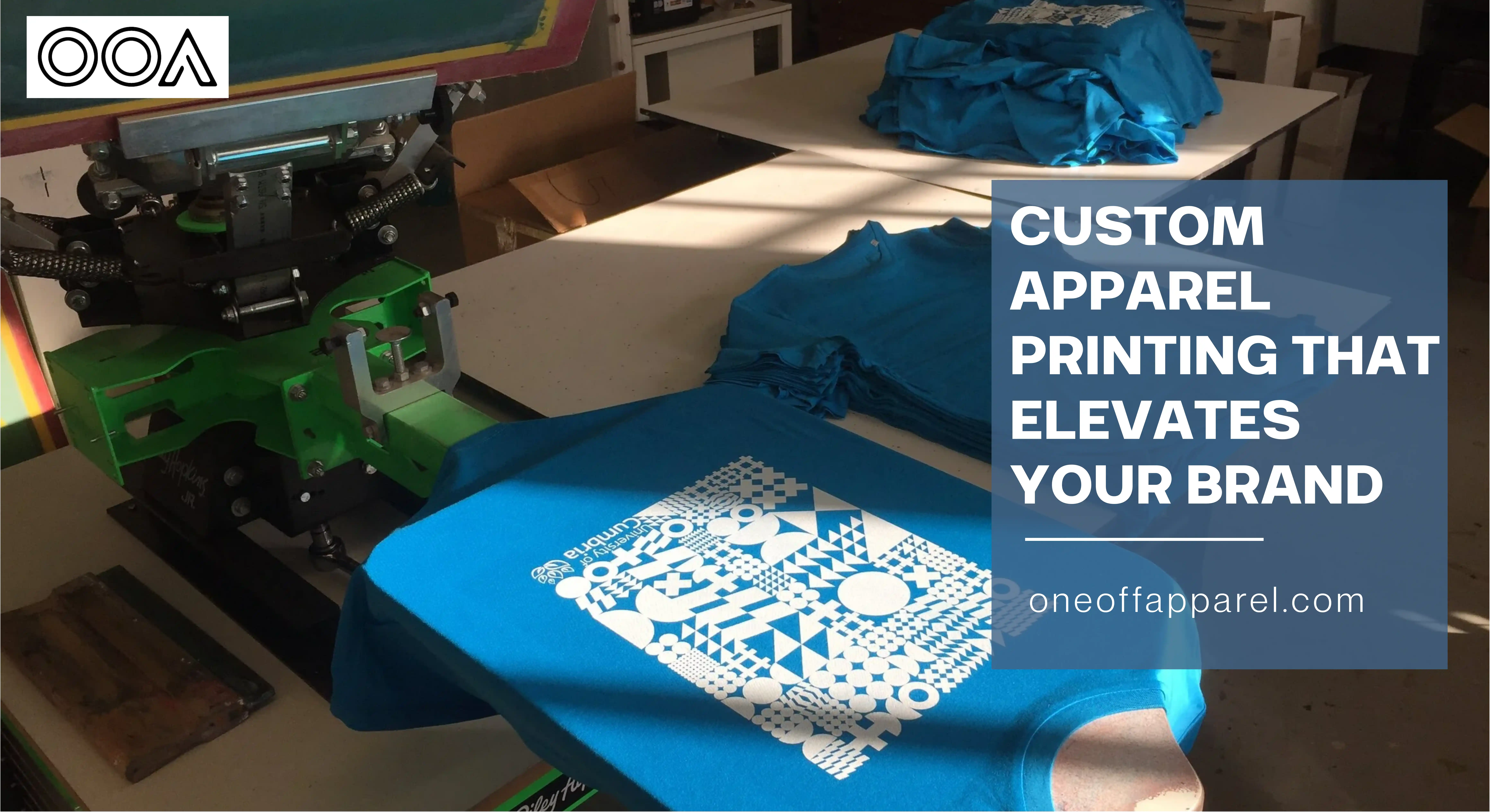

Clothing functions as a really powerful way to communicate better in business settings. When a company outfits its staff or sells their merchandise, those items represent the brand physically. The quality of this representation depends on the manufacturing standards that were used during its production phase. Creating a durable, professional product requires a mix of chemical knowledge along with mechanical precision. Better Apparel Printing is built on knowing exactly how fabrics really behave under heat, stress, and pigments.
Companies like One Off Apparel work hard to manage these variables effectively and build consistent results. This blog looks at the technical side of the industry. It breaks down the methods that turn a plain shirt into a long-lasting piece of branded merchandise.
- How a Fabric Choice essentially dictates Ink Selection
- Why Custom Printing Matters: Matching Physical Goods to Digital Designs
- The Mechanics of a Durable Print: Physics of Screen-Printing Apparel
- Being Compliant and Meeting industry Standards with Private Label Apparel
- Texture and Method in Printed Apparel: Picking the Right Method for the Job
- Art of Sustainability in the Apparel-Printing Production Practices
- Conclusion:
How a Fabric Choice essentially dictates Ink Selection
The term “Apparel Printing” refers to a group of industrial operations. But the correct method depends entirely on the fabric being used.
Cotton is a natural fiber made of cellulose as it absorbs liquid very easily. An absorption like this allows soaking water-based inks into the threads themselves.
Whereas, Polyester is different as it's a synthetic plastic fiber that also repels water. Polyester presents a specific challenge called dye-migration. Whenever a polyester shirt goes through a heater, the dye present in the fabric turns into a gas. This gas then rises through the ink. In these cases, a white print will turn to pink or grey.
But Professional shops can use specific chemical blockers to stop this very reaction. A lack of these blockers, in turn, will ultimately lead to poorer quality. Clearly understanding all these materials is the foundation of this trade.
Why Custom Printing Matters: Matching Physical Goods to Digital Designs
Companies use Custom Apparel Printing to keep their branding consistent.
- A logo on a website uses light to create color. This is called the RGB color mode.
- A logo on a shirt uses pigments. This is the CMYK or Pantone matching system.
These two modes do not match automatically. A production team must mix “inks” by “weight” to get the right colors. They use scales that measure the pigments down to the gram. This kind of precision allows a physical product to match up with the digital designs.
A brand should always be able to maintain this kind of accuracy because any discrepancy between the online logo and its physical-shirt counterpart would weaken that brand’s identity as well as reputation. It's like a task bridging and linking them both; and it focuses primarily on "replication" and “fidelity”.
The Mechanics of a Durable Print: Physics of Screen-Printing Apparel
The most common method for bulk ordering is Screen Printing Apparel. This involves pushing the ink through a mesh screen. The tension of that mesh dictates the overall print quality where tension is measured in “Newtons”. A low-tension screen is soft and drags across the shirt and it smears the ink. Whereas a high-tension screen is tight. It snaps back quickly and leaves a sharp edge.
Curing is the logical next step. Plastisol ink is the standard for durability. It needs the heat to turn from a liquid to a solid. The ink must reach 320 degrees Fahrenheit, because if the dryer turns out too cool, the ink will not bond. Most of all, the print that looks fine at first will crack in the wash.
Custom Screen-Printing Services use thermal probes to check dryer temperatures constantly. This thermal management ensures that the product lasts for years.
Being Compliant and Meeting industry Standards with Private Label Apparel
Many brands are moving towards adopting Private Label Apparel. This involves:
- Taking a standard blank shirt and changing the tags in it.
- The original manufacturer tag is removed.
- A new tag with the brand's logo is printed or sewn in the neck which makes that brand look like the sole manufacturer of the item.
Federal law regulates this process. The Federal Trade Commission (FTC) requires specific data on the new label such as:
- It must list the country of origin.
- It must list the fiber content.
- It must list the wash instructions.
Missing any of this information is considered illegal. The handling of these legal details is a major part of the service. It lets brands design the complete garment appearance while ensuring all FTC labeling requirements are met.
Texture and Method in Printed Apparel: Picking the Right Method for the Job
The feel associated with Printed Apparel changes based on the applied ink.
- High-solids acrylic inks are water-based. They sink into the fabric. This leaves a soft print that breathes well. It is a popular choice for fashion brands.
- However, heavy-work uniforms need something tougher.
- Standard plastisol sits on top of the fabric and forms a shield. It resists abrasion and dirt.
Other methods offer different results like:
- Laser etching burns the top layer of fabric. This creates a subtle, permanent mark. It works well on fleece.
- Leatherette patches add a 3D element. They look rugged and high-end. The choice depends on where the garment will be worn.
- A construction site needs durability.
- A retail store needs comfort.
- And so on!
Art of Sustainability in the Apparel-Printing Production Practices
The industry has started paying more attention to environmental impact. Apparel Printing calls for chemicals, so waste management becomes important. Modern shops use filtration systems. These systems clean the water used to wash screens. They catch solids and chemicals before the water even enters the city pipes.
Product longevity is also a factor. A cheap print cracks and peels quickly. It would basically turn any shirt into an equivalent of that which can be called “trash”. A high-quality print usually lasts for years. Keeping a shirt in use for a long time reduces overall textile waste. In other words, Qualitative manufacturing supports Sustainability.
Conclusion:
In reality, decorating garments is a technical field. It combines engineering with visual design. Every step matters here. The tightness of the screen affects the sharpness. The heat of the dryer affects the durability. The chemistry of the ink affects the color. Brands need this technical accuracy to represent themselves well. As garment decoration technology improves, the quality standards in the industry also increase.
Apparel Printing Service providers like One Off Apparel use these industrial methods to help deliver reliable products. The focus here remains on precision, compliance, and material science to truly meet the needs of the American market.
© Copyright All Rights Reserved