



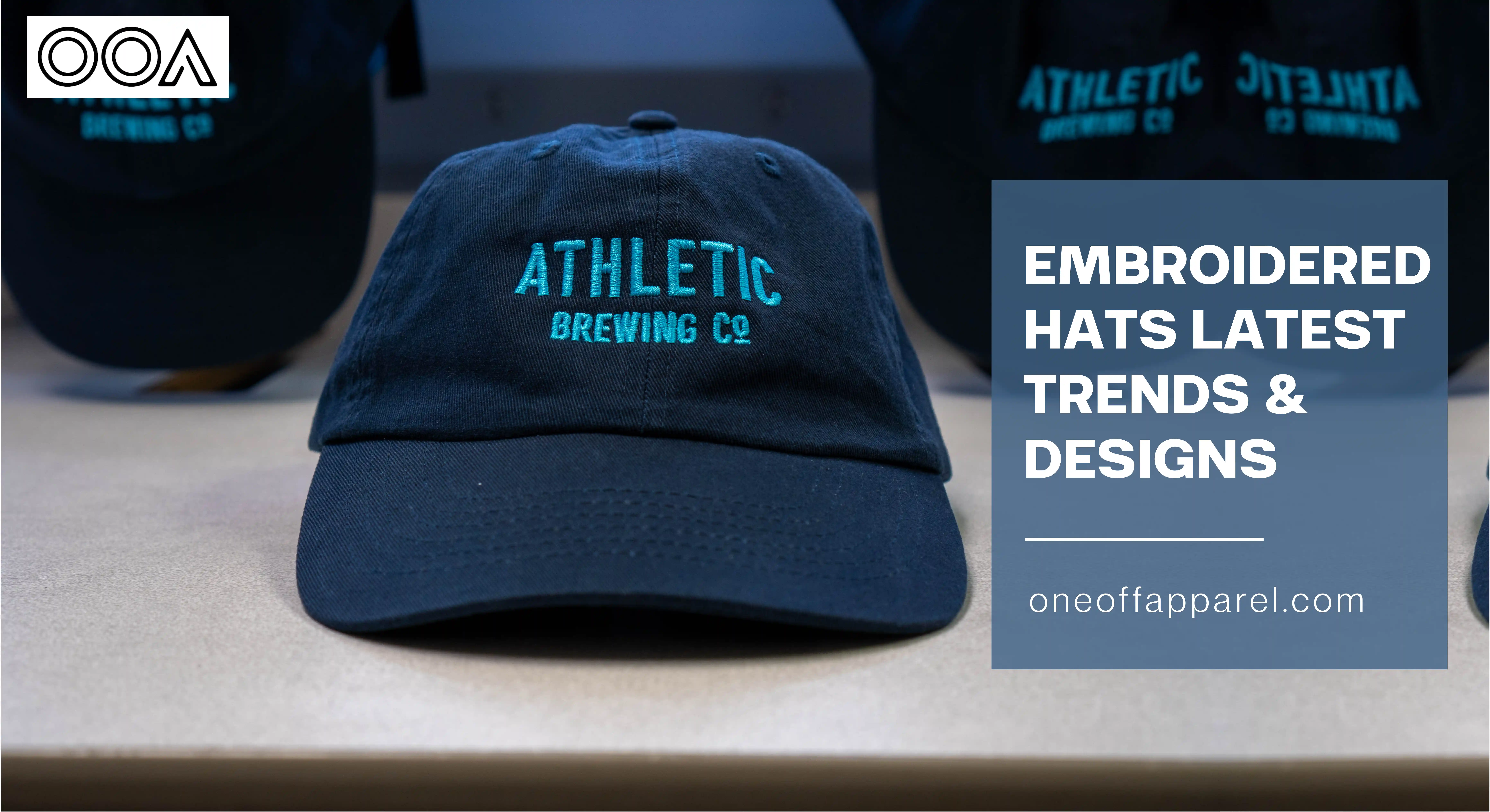

You can tell a good baseball hat from a bad one from across the room. A great one has a design that sits cleanly, text that’s sharp and easy to read, and a shape that just looks right. A bad one often has a puckered logo, blurry letters, or a front that sags. That difference isn't a matter of luck; it's a matter of craft.
It comes down to a series of specific, practical decisions made long before a single stitch is sewn. This guide walks through those decisions, explaining what really goes into making embroidered baseball caps that look professional and are built to last. It’s the kind of hands-on knowledge that defines the work of dedicated American brands like One Off Apparel.
Embroidered Hats: It All Starts with the Right Fabric
The most common reason a custom embroidered hats fails is a mismatch between the fabric and the design. You can’t just pick a material because it feels nice; you have to pick it for the job it needs to do.
Think about the difference between a work-related hat and a casual one. For something you’ll wear daily, throw it in a car, and actually expect to last, a material like Recycled Polyester (RPET) is a smart choice. It’s a tough, resilient fabric that holds its color well and resists the kind of wear and tear that would break down a softer material. This is where sustainable materials also deliver real-world performance.
For a more relaxed, comfortable feel, you’d look at something like Organic Cotton. It’s softer and more breathable, making it perfect for a classic "dad hat" like the Richardson brand. But that comfortable softness comes with a trade-off: it has very little internal structure. If you try to put a big, heavy embroidered design on it, the weight of the thread will literally pull the fabric down, causing the front of the cap or beanies to droop. That’s why you almost always see smaller, lighter designs on that style of hat. The fabric simply can’t support anything more ambitious.
For tack-sharp details, classic Cotton Twill is still a benchmark. Its tight weave creates a stable surface that acts as a perfect canvas for embroidery. For slicker performance fabrics, like those used in athletic hats, there's a critical step that often gets missed: using a stabilizer. This is a backing material that’s placed behind the embroidery area to prevent the high-speed stitching from gathering the thin fabric into a series of permanent wrinkles.
Translating a Design from a Screen to Embroidered Hats Custom
Here’s where many projects go wrong. A design that looks perfect on your computer monitor has to be completely rebuilt to work as embroidery. This is a manual process called digitization, and it’s an absolute craft.
When a digitizer gets a design, they don’t just convert the file. They use special software to essentially repaint the image with stitches. They have to decide the direction of the stitches to create texture, their density to make the color look solid, and what type of stitch to use for borders versus filled-in areas. Most importantly, they have to compensate for the physics of thread pulling on fabric. They will intentionally make shapes in the digital file slightly distorted so that when the stitches pull the fabric, the final result is a perfect circle or a perfectly straight line.
Without this human skill, you get predictable failures. Text that’s too small becomes an unreadable smudge. Corners that should be sharp become rounded. This manual translation is one of the most important innovative techniques in making high-quality apparel, and it’s why a professionally made embroidered hats custom piece looks so much cleaner and sharper than an amateur one.
Matching the Design to the Build of Custom Embroidered Trucker Hats
Finally, even with the right fabric and a perfect design file, the hat's physical structure has to match the design's ambition. This is where you see bold, statement designs succeed or fail.
The reason 3D Puff embroidery looks so good on certain hats is because those hats are built for it. A structured cap—like the classic custom embroidered trucker hats—has a stiff backing called buckram fused to the inside of the front panels. This creates a firm, stable wall that can support the high tension and weight of a dense, raised design. It’s the only way to get that clean, sculpted look. If you tried to put that same 3D puff design on a soft, unstructured hat, you’d get a lumpy, distorted mess.
This is why understanding the hat's architecture, including its colour, is so crucial. It’s why panoramic designs are best suited for 5-panel caps, which don’t have a seam running down the middle of the front panel to break up the image. The growing demand for genuinely good, embroidered hats is being driven by customers who recognize that this synergy between the design and the object itself is what creates a truly premium product.
What Is A Customized Cap?
A customized cap is a unique headwear piece tailored to individual preferences, featuring personalized designs, colors, or embroidery. These caps allow consumers to express their style and personality, making them perfect for promotional events, team sports, or personal fashion statements, ensuring each hat stands out in a crowd.
Conclusion
In the end, a great custom hat and headwear isn't a fluke. It's the result of a series of smart, informed decisions. It comes from choosing the right fabric for the hat's purpose, from having a skilled person manually rebuild the design for Flexfit thread, and from matching that design to embroidered hats and visors that have the structural integrity to support it.
When all those pieces are thoughtfully aligned, the result is a durable, professional, and impressive piece of apparel that does its job. This methodical, craft-focused approach is the only way to get it right, and it’s the standard upheld by expert American shops like One Off Apparel .
© Copyright All Rights Reserved