



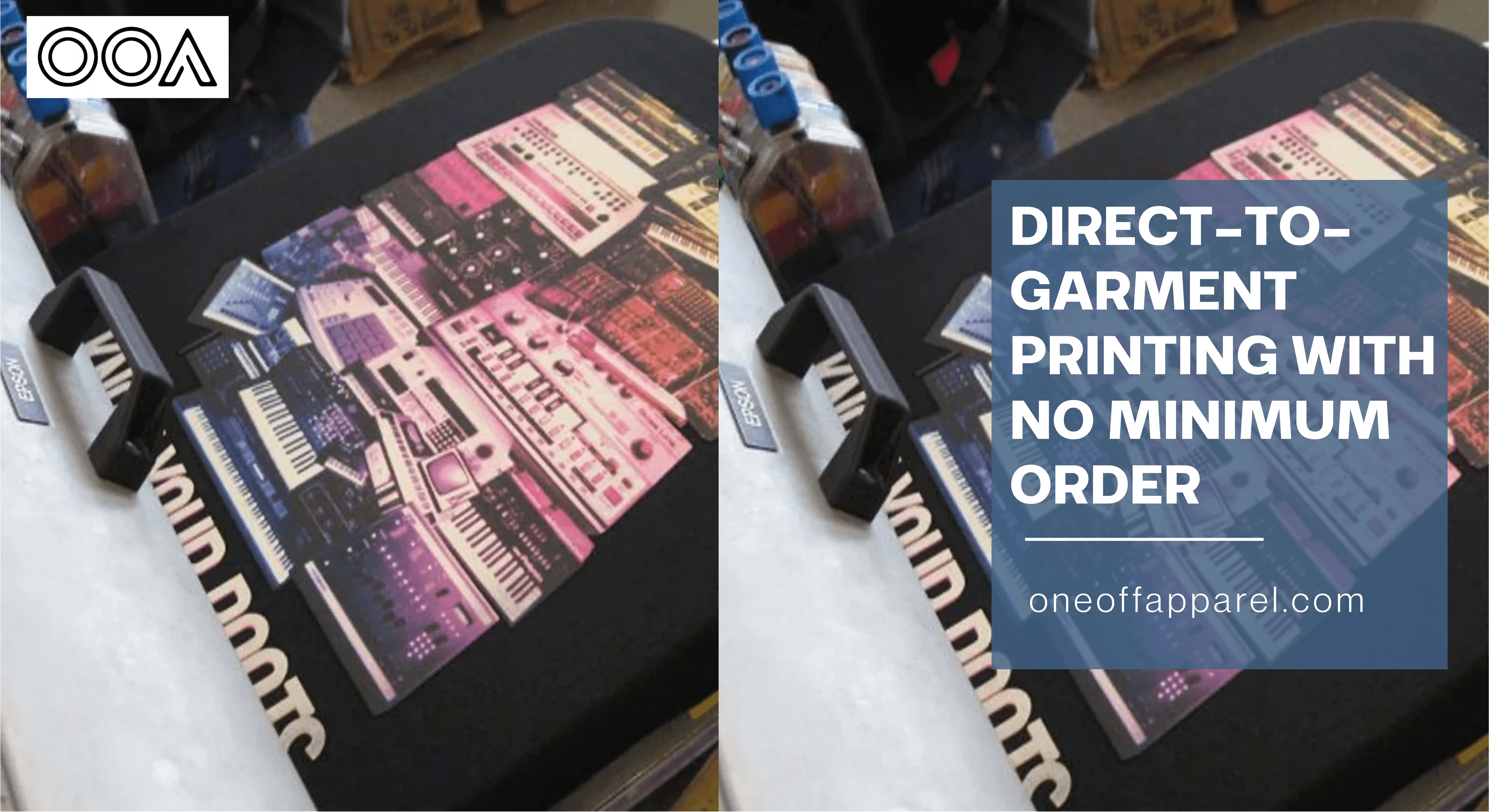

Most people rarely think about the logistics of garment production until they decide to create something of their own. You might have a brilliant concept for a company logo or a family reunion design, only to hit a wall when a local shop demands a fifty-shirt minimum order. For ages, this frustration used to be the industry standard because the labor required to set up physical screens was immense, making small runs financially impossible. Fortunately, the landscape has changed significantly with advancements like Direct-to-Garment Printing.
Companies such as One Off Apparel have adapted to this very shift because they understand that modern customers prioritize flexibility alongside quality.
- The Science of Digital Precision
- The Direct-to-Garment (DTG) Printing method
- The Crucial Role of a Custom T-shirt Maker
- Advantages of Custom T-shirts with No Minimum Order
- Clothing Printing Companies: What to Look for
- Affordable Custom Printing Options (Cheap to Premium T-shirt Printing)
- Custom Shirts for Business
- Conclusion:
The Science of Digital Precision
We have shifted from a purely analog world to one where digital precision drives production, finally making small orders accessible. The industry has evolved to focus on the science of the materials. Digital precision changes the way of ink interaction with the fabric at a microscopic level to create a durable and lasting result.
The Direct-to-Garment (DTG) Printing method
To understand the product, you have to first understand the machine. Direct-to-Garment Printing is often compared to a home office printer, but that comparison is too simple. The technology involves a specialized print head that glides over a stationary platen holding the garment. This machine jets millions of microscopic droplets of water-based pigment onto the fabric.
This is where the real magic happens. The ink is formulated to bind with the cellulose fibers of cotton. It does not sit on top of the shirt like a thick plastic shield. It soaks in. This, in turn, allows the fabric to continue being breathable. When you run your hand over a DTG print, you would barely feel the print present there. This method also removes color limitations. Old methods required a different screen for every color. Digital printing handles the full CMYK spectrum plus white ink simultaneously. This means a photograph of a sunset with thousands of orange and red variances printed perfectly.
The Crucial Role of a Custom T-shirt Maker
Owning a hammer does not make someone a carpenter. Similarly, owning a digital printer does not make someone a professional custom t-shirt maker.
The skill lies in the preparation. A professional operator knows that humidity levels in the shop affect how the ink dries. They know that a file with low resolution will result in a jagged image. They act as the final quality check between your computer screen and the finished product. They also understand the importance of the heat press. After the ink is sprayed, it is wet. It needs to be cured at specific temperatures, usually around 320 degrees Fahrenheit, to ensure washability. If this step is rushed, the print fades. A dedicated maker monitors these variables constantly to ensure the chemical bond holds.
Advantages of Custom T-shirts with No Minimum Order
The removal of setup costs changed the economics of the industry. Because the setup is digital, costing the same for one shirt as it does for one hundred, shops can offer custom t-shirts with no minimum policies. This is a massive advantage for testing. A brand can launch a new design online and only print it after a customer buys it. This eliminates the risk of unsold stock.
It also allows for hyper-personalization. You can print a different name on every single shirt without slowing down the production line. This was financially impossible ten years ago. It gives power back to the consumer who wants variety without the burden of bulk.
Clothing Printing Companies: What to Look for
When you are vetting clothing printing companies, you should look deeper than just their price tags. The location of the company matters too. A business operating in the United States must adhere to those specific safety and labor standards that ensure ethical production. You should also ask them about their pre-treatment processes. Dark shirts require a liquid primer for the white ink to actually stand out.
High-end shops use automated machines to spray this primer evenly. Low-end shops may end up using a hand sprayer, which then leads to inconsistent results. On top of it all, a versatile shop will not force you into one method. They should be able to offer screen printing apparel for your larger orders because they understand that different projects demand different tools.
Affordable Custom Printing Options (Cheap to Premium T-shirt Printing)
The term "affordable" is relative to your volume. Cheap T-shirt Printing is a reality, but you have to choose the right lane. If you need bulk shirts for printing, say over 50 or 100 units with a simple logo, traditional screen printing is the most cost-effective path. The high setup cost is diluted across many units. However, if you need ten shirts with a complex, full-color image, Direct-to-Garment Printing is the affordable choice. You avoid the screen fees entirely. True value comes from pairing the print with the right garment.
A cheap, rough shirt will make a great print look bad. A ring-spun cotton shirt provides a smooth surface that allows the digital ink to resolve sharply. It is about understanding that the fabric is the canvas, and a better canvas yields a better painting.
Custom Shirts for Business
For a company, apparel is advertising. Custom shirts for business usage need to be durable and consistent. A construction crew might need heavy-weight cotton that can take a beating. A tech startup might want a soft, fashion-forward fit. The digital process supports both. It ensures that the branding colors remain accurate from the first shirt to the last. It simplifies the supply chain for business owners who do not have time to worry about production logistics.
Conclusion:
Creating professional apparel is no longer out of reach. We now have access to manufacturing power that was once reserved for major labels. Direct-to-Garment printing drives this change. It combines professional quality with the flexibility to produce exactly what is needed.
Brands such as OOA remain committed to using these tools to turn concepts into physical goods. A clear understanding of the technical process ensures that the final result holds up over time.
© Copyright All Rights Reserved