



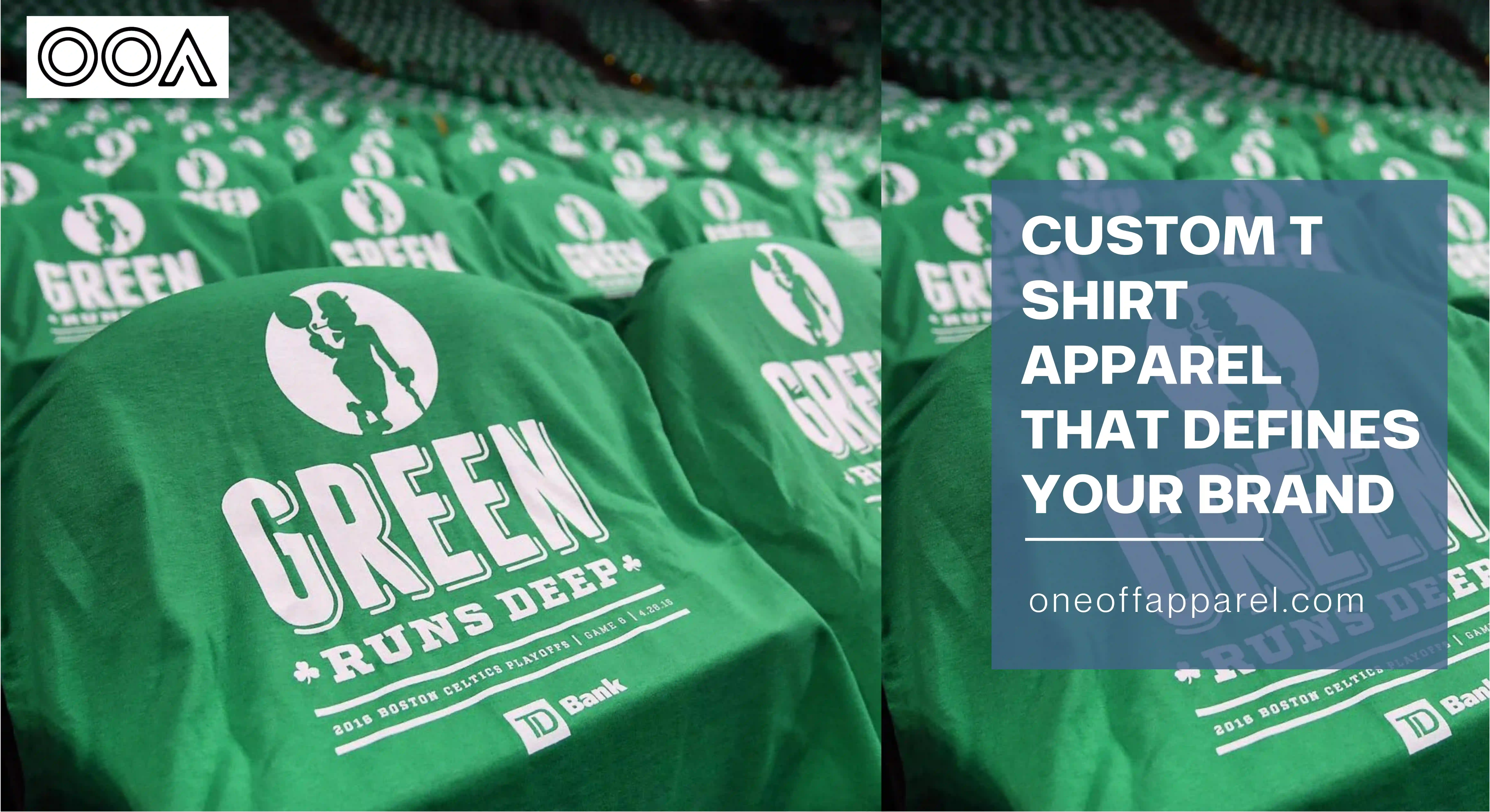

Here is a hard fact of marketing: most promotional apparel ends up in the back of a closet. That outcome isn't inevitable. The journey from a forgotten giveaway to your favorite custom t shirt apparel comes down to making deliberate choices in technology, material, and design. To commission an apparel that actually makes a real impact, be it for a brewery's new merch line or a tech company's team gear, you must understand these critical factors.
Navigating the technical maze of fabric, ink, and artwork files is where a specialist firm's expertise becomes essential. A company like One Off Apparel, for example, provides the hands-on knowledge needed to turn a concept into a quality garment.
- 1. Custom T Shirt Apparel – The Garment Itself: The Foundation
- 2. Print Methods for Custom Apparel T Shirts – The Right Tool for the Job
- 3. The Blueprint for Cheap Custom Apparel – Your Artwork File
- Where Are Clothing Labels Commonly Used?
- Conclusion: Bringing Your Vision to Life with Customized Apparel
1. Custom T Shirt Apparel – The Garment Itself: The Foundation
Always begin the process long before thinking about ink. The single most important decision is the garment itself, including options like trendy tank tops. Treat this choice as your foundation, as it affects not only comfort but also dictates what is even possible from a design perspective.
1.1 Understanding Fabric Blends
The tag on a shirt tells a story about how it will feel, perform, and last.
- 100% Cotton: The classic choice for a reason. Imagine the soft, breathable t-shirts sold at a concert. For printing, insist on ringspun cotton for its superior, smooth surface that holds sharp detail. For DTG printing, 100% cotton is king. A local coffee shop selling its own branded tees should choose this for its classic feel and print quality.
- Polyester & Blends: This is the technical workhorse for anything performance-related. When outfitting a landscaping crew or a company soccer team, a 50/50 blend is the smart call. It wicks sweat and resists wrinkling in a gym bag far better than pure cotton.
- Tri-Blends (Cotton/Polyester/Rayon): Use this premium tier when you want to make an impression. It’s exceptionally soft with a flattering drape. For a high-end gift for speakers at a tech conference, a tri-blend custom t shirt apparel feels less like a promo item and more like a gift from a boutique.
1.2 The Role of Fabric Weight (GSM)
GSM (Grams per Square Meter) is a technical number for fabric density. In short, it tells you how substantial a shirt feels, which directly impacts its perceived value.
| Weight Category | GSM Range | The Real-World Scenario |
|---|---|---|
| Lightweight | 120 - 150 GSM | Choose this for the 500 free t-shirts you're giving away at a summer music festival. |
| Medium-weight | 150 - 180 GSM | The go-to for a brewery's main merchandise line. Solid, durable, and feels great. |
| Heavyweight | 180+ GSM | The choice for a skateboard brand or artist creating a limited-edition apparel drop. |
2. Print Methods for Custom Apparel T Shirts – The Right Tool for the Job
With the perfect shirt chosen, the next step is bringing the design to life. This choice of printing method will define the final look.
2.1 Screen Printing
The tried-and-true workhorse for good reason. It pushes a thick layer of ink through a stencil on our shipping page, creating a durable, vibrant print that sits on top of the fabric.
- Use it for: An annual 5k charity run with 200 participants. The bold, two-color event logo needs to be bright and last through dozens of washes. Screen printing is built for volume.
- Remember: The cost per shirt is low for large runs, but each color requires a separate screen, making the setup costs inefficient for a small, multi-color project.
2.2 Direct-to-Garment (DTG)
Think of DTG as an advanced inkjet printer for clothes that supports a variety of fonts. It precisely sprays eco-friendly, water-based ink directly into the shirt's fibers.
- Use it for: An artist wanting to sell t-shirts with a detailed, full-color painting. DTG can capture every gradient and brushstroke. It is also perfect for an online store needing to print shirts on-demand.
- Remember: For top-tier results, insist on 100% cotton. The soft feel is amazing, but the colors on a black shirt might appear slightly more muted than a thick screen print.
2.3 Embroidery
Embroidery is in another class entirely. It is a stitched, textured design that immediately signals professionalism and quality.
- Use it for: A financial firm's clean logo on the left chest of a polo shirt for a trade show, or the name of a golf course on a cap. It adds a touch of class that printing can't replicate.
- Remember: It's priced by stitch count. A huge, full-back embroidered design on a jacket would be incredibly expensive. It excels with clean logos and text.
3. The Blueprint for Cheap Custom Apparel – Your Artwork File
Accept this hard truth about printing: the final product will only ever be as good as the file you provide. A great printer cannot fix a bad file.
3.1 Vector vs. Raster
This is the most common technical hurdle. Get this right.
- Vector (AI, EPS, SVG): Always supply a vector file if you have one. As it's made with math, a vector logo can be scaled from a business card to a billboard with zero loss in quality. This is what printers need for sharp, clean lines, especially when you are creating custom team shirts.
- Raster (PNG, JPG, PSD): This is a photograph, made of pixels. If you try to enlarge that tiny logo you pulled from your website, you will get a blurry, pixelated mess. If you must use a raster file for DTG, it must be 300 DPI (Dots Per Inch) at the final print size.
3.2 A Pro Touch: Apparel Custom Labels
For a truly finished item, always add a custom inside label.
Replacing the manufacturer's tag with a simple printed tag (your logo, the event name) is a detail that elevates everything. It transforms the custom apparel t shirts from a generic blank into a piece of your brand. This is how you produce customized apparel that feels intentional, a world away from generic, cheap custom apparel
Where Are Clothing Labels Commonly Used?
Clothing labels are commonly used in custom t-shirt apparel to provide essential information such as brand identity, care instructions, and sizing. They enhance the overall presentation of the garment, making it more appealing to consumers while ensuring compliance with industry standards and regulations for clothing products. Get Cheap Personalized T-Shirts Today!
Conclusion: Bringing Your Vision to Life with Customized Apparel
Creating custom t shirt apparel that people actually want to wear is not a mystery. It is the result of smart technical choices that align with a specific goal.
The process demands choosing a soft tri-blend for your VIPs, using screen printing for your big event, and always supplying a clean vector file. When these elements align, the result is a wearable piece of your brand story. To ensure the final product looks as good in real life as it does on screen, partner with an experienced decorator. That hands-on expertise, which companies like One Off Apparel provide, is what protects your investment and guarantees a professional result. For any inquiries, please visit oneoffapparel contact page to get in touch with our team.
© Copyright All Rights Reserved